Explore the nuanced process of formulating a clear, resonant thesis statement for your personal narrative, bridging personal experience with universal themes.
Navigating the Core: How to Articulate a Thesis Statement in Personal Narratives
In the landscape of narrative writing, personal narratives stand out as a conduit for expressing individual experiences, emotions, and insights. At the heart of a compelling narrative lies the thesis statement, a critical component that encapsulates the essence and purpose of the story. Constructing a thesis statement for a personal narrative requires a nuanced approach, blending introspection with a message that resonates universally. This article explores the intricate process of formulating a thesis statement for your personal narrative, emphasizing strategies that ensure clarity, purpose, and connection with the audience.
The Unique Role of a Thesis Statement in Personal Narratives
In academic and expository writing, the thesis statement typically serves as a pointed declaration of the essay’s main argument or analysis. However, in the realm of personal narratives, the thesis statement transforms to perform a slightly different function. It transcends the mere presentation of a central theme or lesson derived from personal experience, expanding to set the tone and direction of the storytelling. This assigns the thesis statement a pivotal role in personal narratives, one that necessitates careful consideration and crafting to effectively capture and convey the depth of personal experiences and insights.
Strategies to Write a Thesis Statement for Your Personal Narrative
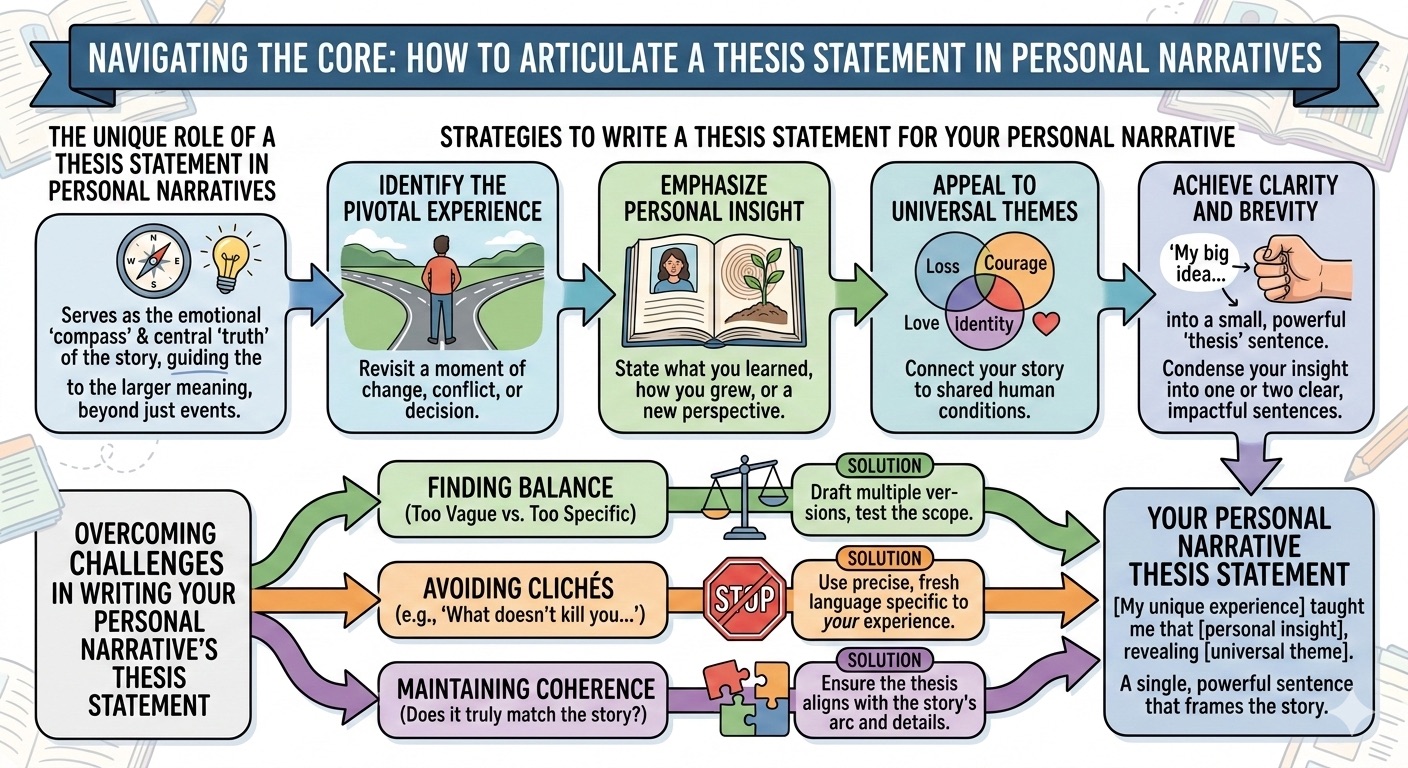
Writing a thesis statement for your personal narrative merges personal reflection with the quest for a broader appeal. The process can be outlined in several strategic steps:
Identify the Pivotal Experience: Start by reflecting on a key experience or theme central to your narrative. Consider what pivotal change or lesson it presents and how this could form the backbone of your thesis statement.
Emphasize Personal Insight: Your thesis should reflect personal insights or transformations that signify growth or understanding, distinctively linking your story to broader human experiences.
Appeal to Universal Themes: Although rooted in personal experience, effective thesis statements touch upon universal themes, making your story relatable to a wider audience. This element of universality can significantly enhance the narrative’s impact.
Achieve Clarity and Brevity: An impactful thesis statement is both clear and concise, summarizing the essence of your narrative without oversharing details.
Examples of Evocative Thesis Statements in Personal Narratives
Illustrative examples shed light on crafting thesis statements that are both personal and universally appealing:
"Embarking on a solo journey to the heart of the Amazon not only tested my survival skills but also taught me the value of solitude and self-reliance in navigating life’s unpredictable paths."
"Confronting my fears during a public speaking event unveiled the transformative power of vulnerability and the importance of embracing our authentic selves."
Overcoming Challenges in Writing Your Personal Narrative's Thesis Statement
Writers may face several obstacles in sculpting the perfect thesis statement for their personal narratives:
Finding Balance: Achieving the right balance between personal depth and universal connection can be intricate, yet it is essential for a resonant thesis statement.
Avoiding Clichés: While personal narratives often touch upon common themes, your thesis should strive for originality and avoid well-trodden paths.
Maintaining Coherence: Keeping your thesis statement aligned with your narrative’s trajectory can be challenging given the fluidity of personal storytelling but is crucial for clarity and impact.
Conclusion
The thesis statement in a personal narrative serves as both a beacon and a bridge guiding the narrative’s direction and connecting with the reader through shared human experience. Crafting it demands a reflective and thoughtful approach, balancing personal insight with universal appeal. By adhering to strategic steps and being mindful of common pitfalls, writers can effectively articulate a thesis statement that imbues their personal narrative with clarity, purpose, and resonance.